A lot of people get into pet care because they love dogs. While that helps, it is not enough to build a business around. A daycare and boarding facility is a real operating business with real constraints: real estate, staffing, cleaning, customer communication, animal behavior, pricing, scheduling, insurance, local rules, and the daily judgment calls that never quite show up in the business plan. The work is rewarding, but it is not casual. Once you have employees, your decisions affect more than your own future; they affect the livelihoods of the people counting on the business, too. If you are starting from scratch, the goal should be more than “opening a dog business.” The goal should be to build something sustainable that customers trust, love, and recommend.

That is why I enjoyed talking with Susan and Lauren from Bark Mountain Pet Resort (watch the full video above). In many ways, their experience is probably closer to the reality of starting a pet care business than the simplified version people imagine. They did not start with a perfect facility, unlimited capital, or decades of ownership experience. They started as pet owners who saw gaps in the market, spent years researching, worked with advisors, found a workable location, took over an existing facility, changed the operating model, and fought through the first year of ownership. What stood out was not that they avoided the hard parts. It was how much preparation they put in before opening, and how willing they were to keep solving problems once the doors were open.
“Every day was so hard. It felt like we were walking uphill in quicksand.” - Lauren Crandall
Focus on the customer problem
The first lesson from Bark Mountain is that the business should start with the customer problem, which may be very different from the original concept. Susan and Lauren first talked about opening a dog park bar, which came from their own experience as dog owners. That idea was the spark that started their journey, but as they dug deeper, they recognized a more immediate opportunity: providing accessible care for people who were not well served by the options already in the market. In their area, that included healthcare workers and others working long shifts. As Susan explained, “We have nurses and doctors who can’t use dog daycare because the hours are not conducive for them.” That insight shaped Bark Mountain’s early approach.

Once they started looking at the numbers, the facility requirements, and the practical needs in their market, the dog bar took a back seat. When they opened, they offered 24/7 scheduled drop-off and pickup because accessibility was not just a nice differentiator; it was the problem they were trying to solve. The dog bar is still on the table for a future expansion, or perhaps a future facility, but they made the right early decision: focus first on the part of the business that solved a clear customer need.
That is a good lesson for any new operator. Before you choose a name, design a logo, or start pricing turf, you need to understand what is actually missing in your market. Maybe customers need better hours. Maybe local boarding is booked months ahead of holidays. Maybe dogs are coming home overstimulated from all-day play. Maybe customers want a cleaner, more transparent, easier-to-book experience. The opportunity is usually more specific than “people here love dogs.” The opportunity is finding the part of the market that is not being served well enough and building around that.
Gaining expertise and learning from experts
The second lesson is to get real industry experience before you sign a lease. Lauren’s advice to someone starting from zero was simple: “I would work in a facility.” There are things you only learn by being inside the operation: how dogs behave in groups, how quickly the day can change, how much cleaning is actually required, how customers communicate when they are worried, how managers make decisions, and what happens when several small issues become one much bigger issue. Lauren put it plainly: “So many things can happen in a day. Sometimes, they will all happen at the same time on that day.” That is ownership. It is not just loving dogs; it is being the person responsible for deciding what happens next.
Before opening Bark Mountain, Susan and Lauren took that preparation seriously. Lauren left her job and went to work inside pet care facilities so she could learn the business from the ground level. Susan toured more than 100 facilities across the country, paying attention to the customer experience, the drop-off and pickup process, how the facilities smelled, how the dogs seemed when they came home, and what each operation seemed to do well or poorly. They studied the business from both sides: as future owners and as customers.

They also knew when to get help. A lender referred them to the Small Business Development Center, and Susan gave that group a lot of credit for helping them understand what lenders would need to see and how to shape the business plan. That is a useful reminder for anyone starting out: you do not need to figure out every part of the process alone. You do, however, need to know what you are opening, how many dogs you can safely care for, how you will staff the facility, what your cleaning and vaccination policies will be, and how the numbers work if the business takes longer than expected to ramp. If those answers are still fuzzy, you may have a good idea, but you are probably not ready for a lease.
Selecting a space
The building is often where the dream gets expensive. Bark Mountain originally wanted a broader concept that included a dog park bar, daycare, boarding, and more, but once they got into the numbers, they made a more disciplined decision. Instead of taking on too much debt too early or trying to force the full vision into the first location, they focused on opening at a reasonable size, proving the business, and leaving room to grow later. Then came the harder part: finding a space where the landlord, location, layout, size, and use all worked. Lauren described the search for a place to lease as “rough,” and Susan said, “That was the hardest part of the entire thing was finding a building. It took two years of looking.” That should not scare someone away, but it should reset expectations.
A pet care facility is not a normal retail lease. Some things can be improved with enough work and budget: flooring, paint, turf, enclosures, cleaning systems, lobby experience, play yard setup, and how dogs move through the space. Bark Mountain did a lot of that work themselves to get the facility ready and make it feel like their own. Other things are much harder to fix later: the location, neighbors, parking, noise sensitivity, whether the use is allowed, whether the landlord is comfortable with dogs in the building, and whether the footprint gives you enough room to operate safely. Before signing a lease, separate what can be upgraded from what you are permanently accepting, then budget honestly for the work required to make the space functional.
That budget needs to include more than the obvious costs. As Susan said, “We had what we thought was a gigantic budget. And then we got the ball rolling. That was nothing.” Rent, kennels, payroll, and equipment are easy to see coming. Demo, repairs, paint, flooring, turf, plumbing, laundry, cleaning systems, signage, software, deposits, insurance, legal, utilities, marketing, and every surprise that appears once you have the keys are easier to underestimate. Bark Mountain stretched their budget with hands-on work, including painting, demo, turf, sealed mats, and community work days where customers helped improve the facility. Susan said it helped customers feel “like they were a part of their dogs’ enjoyment,” which is a pretty great outcome for a weekend spent sealing mats.

My advice is to separate opening needs from future upgrades. Opening needs are the things required to operate safely and professionally: secure enclosures, cleanable surfaces, water access, laundry, sanitation, staff training, customer intake, vaccination records, emergency procedures, software, and basic signage. Future upgrades might include additional grooming capacity, premium play equipment, retail displays, cameras, expanded yards, or a more polished lobby. Some items are worth buying well from the start. Bark Mountain is upgrading to Mason kennels and found some secondhand to save money, but Susan’s rule still applies: “Buy it nice or you’re going to buy it twice.”
Define what makes you different
Once you know the customer problem and have a workable facility plan, the next question is what will make customers choose you. “We offer daycare and boarding” is not enough. That describes the category, not the reason someone should trust you with their dog. Bark Mountain had to answer that question early, and one of the ways they did it was by deciding not to simply copy the all-day play model for daycare. After working in and visiting different operations, they saw an opportunity to create a different kind of experience built around structure, rest, enrichment, lower dog-to-staff ratios, and more individualized care.
Lauren’s experience working in other facilities helped make that clear. She described being in play groups where “there would be like 30 to one person,” and said it felt like she was “fighting a battle that I was never going to win.” That is not just a staffing issue; it becomes part of the customer experience. If your team is only managing the room, they may not have the time or space to really understand each dog. Bark Mountain wanted something different. Lauren said, “We get to know every single dog that comes in the facility, what they like, what they don’t like, what they will go crazy for.” That became part of what made Bark Mountain so different.
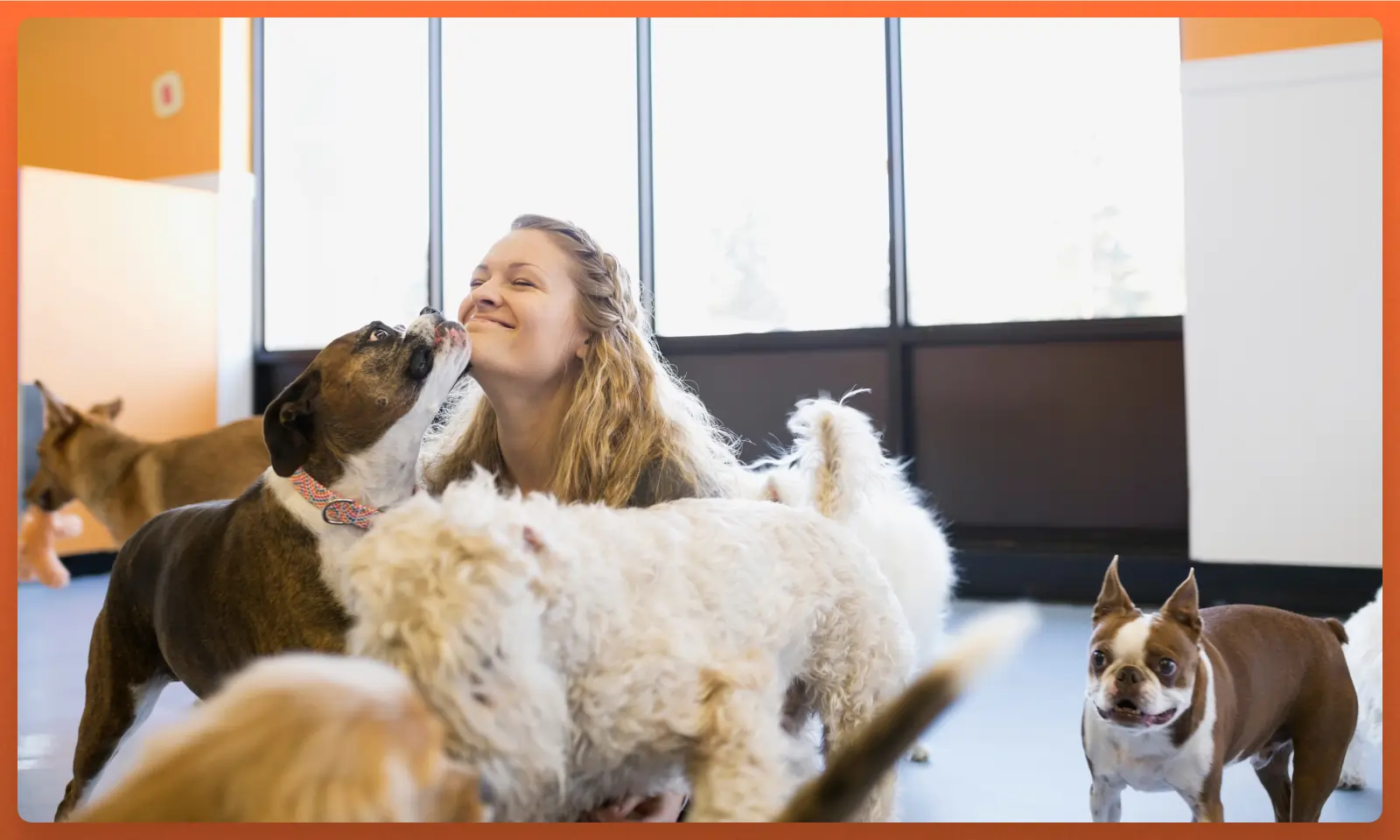
For a new operator, this is where competitive advantage becomes practical. Are you the most accessible option for long-shift workers? The most structured daycare environment? The place known for cleanliness, enrichment, nervous dogs, senior dogs, grooming convenience, or highly personal communication? Whatever the answer is, it has to show up in the operation, not just the marketing. In Bark Mountain’s case, individualized care requires notes, staff communication, run cards, lower ratios, enrichment routines, and a process for keeping information current. That is the difference between saying you offer personal care and building a business that can actually deliver it every day.
Branding and positioning your business
If you take over an existing facility, you inherit more than the building. You inherit customer expectations, prior habits, and sometimes a reputation you have to work through. Bark Mountain took over an existing location and rebranded it, but Lauren was clear that the challenge was not just putting a new name on the door. Some customers assumed it was just new management. Others were used to the old way the facility operated. Bark Mountain had to prove that the experience was different.
“When you take a business over sometimes that’s great. Other times you’re fighting what was already here.” - Lauren Crandall
One of their first changes was opening the lobby. Previously, customers would text from the parking lot and staff would come outside to get the dog. The prior setup had a good reason, particularly with training customers and dogs who needed more controlled interactions, but the customer did not necessarily know that. From the outside, it could feel like the facility did not want people coming in. Bark Mountain removed that barrier and built a more open, transparent experience. They wanted customers to tour, see the facility, smell the facility, and feel welcome. They also hosted an open house with play groups so dogs and customers could experience the changes directly. If you buy an existing facility, this kind of transition plan matters. You need to explain what is changing, what is staying the same, why the changes are better, and how customers can see the difference for themselves.
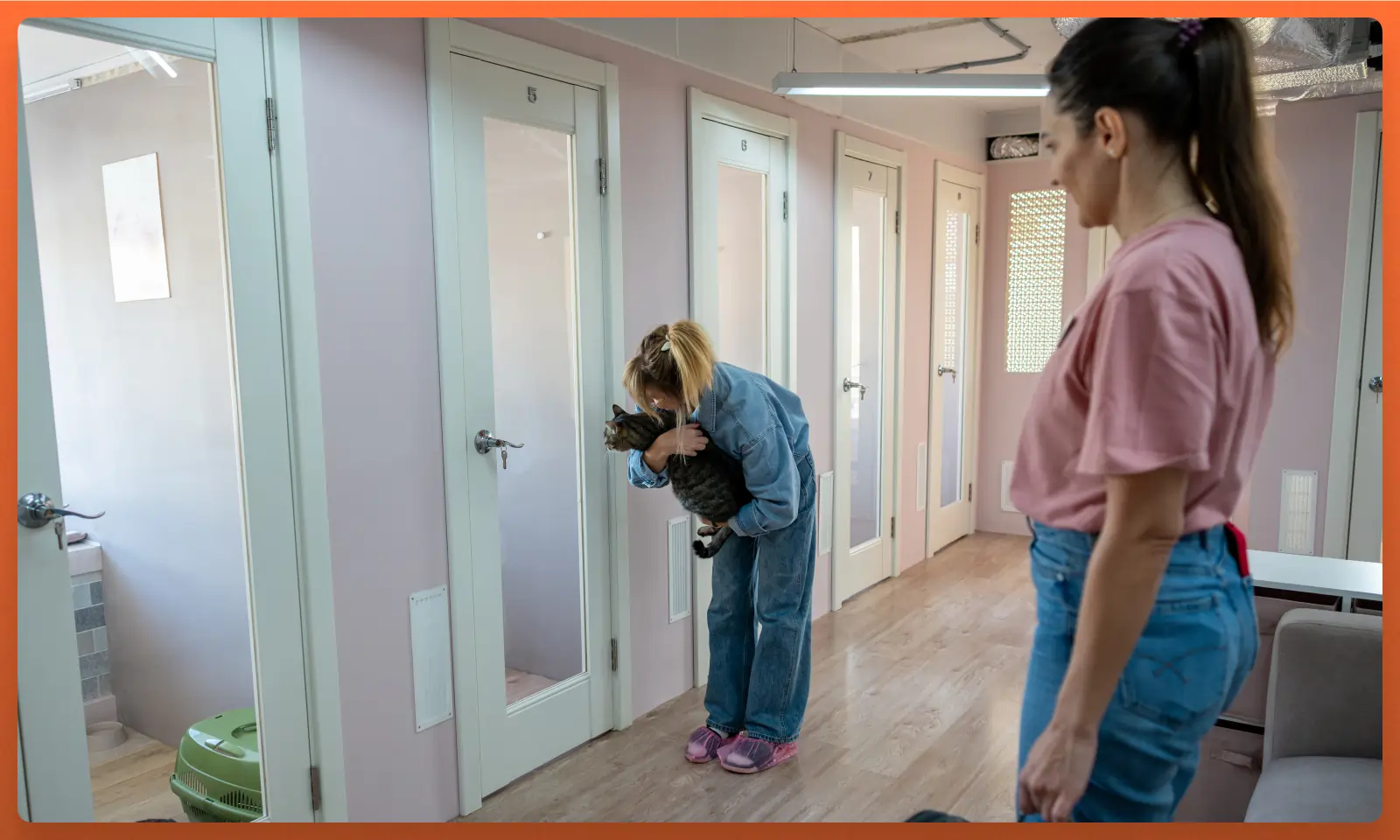
If you are opening a brand-new facility, you do not have an old reputation to overcome, but you also do not have built-in trust. To get potential customers to consider you, your brand needs to make it clear who you are for, what kind of experience they should expect, and why your approach is different from the other options in town. If Bark Mountain were starting a new facility from scratch, they might ground that identity in the needs they saw firsthand: more accessible care, a cleaner and more transparent facility experience, and a more individualized approach to each dog. For a new business, branding is not just the name, logo, or colors. It is the promise you make to the market and the operational choices that prove it every day.
Managing capacity and staffing
For a new facility, one of the hardest things to manage is the balance between staying busy and staying in control. You want enough demand to keep the business healthy, the staff productive, and the facility predictably occupied, but capacity is not a simple headcount exercise. The question is not just “How many dogs can we fit?” It is “How many dogs can we safely and consistently care for with the space, staff, and mix of dogs we have today?” Two days with the same number of reservations can feel completely different inside the building.
Bark Mountain’s experience is a good example. Ten regular daycare dogs that know the routine are not the same as ten brand-new dogs arriving for boarding on a holiday weekend. Dogs with medication needs, behavior notes, senior care needs, first-day nerves, or special handling requirements all change the labor required to run the day well. Lauren uses arrival and departure information to plan staffing more thoughtfully. If she sees 13 dogs checking in and four of them are new, she knows they may need an extra staff member because those dogs will require more attention when they arrive. That is how an operator starts to think beyond capacity on paper and plan for the actual care load.
This is where systems become important, especially for a new business trying to build consistency. Online booking can help keep the facility predictably busy by making it easy for customers to reserve daycare, boarding, and other services without another phone call or back-and-forth email. But the point is not just to make booking easier. The point is to understand what is coming, what is already committed, and what the team can actually handle. Bark Mountain still keeps some space available for members and urgent situations, which is part of how they deliver the kind of service they want to be known for. That flexibility only works if you have a clear view of capacity.

As the business grows, personal service also needs support. One of the things that stood out about Bark Mountain is how deeply Susan and Lauren know their customers. They talked about families having babies, customers going through major life changes, and their trainer pursuing education to help families safely integrate dogs and children. That kind of relationship is a real advantage, but it can break down if all the important details live in one person’s head. Bark Mountain uses notes, messaging, run cards, and customer history so the team can keep track of what matters. As Lauren explained, when “something crazy happens,” they can look back and say, “This has happened before. It’s right here. We know what’s going on.”
Closing thoughts
Bark Mountain grew from roughly 30 dogs a day when they opened to 60 or 70 dogs a day, with some days over 80. They are now hitting capacity and thinking through the next stage: more cabins, expanded grooming, better use of square footage, and possibly a different long-term real estate strategy. That is a good problem, but it is still a problem. Growth creates its own set of decisions. Before expanding, you need to know where the bottleneck actually is. Is it space, enclosures, staffing, grooming capacity, or process? Will expansion improve the business, or just make everything busier? Bark Mountain is asking those questions from a position of proof, which is exactly where you want to be.
If I were giving advice to someone starting a new pet care facility, I would not tell them to simply follow their passion. I would tell them to study the market, work inside a facility, get help with the business plan, be patient with real estate, treat cleanliness as part of the product, make booking easy without giving up control, and build systems that help the team deliver personal care consistently. Susan and Lauren’s story is encouraging because they did not have every answer on day one. They kept learning, kept improving, and kept making the business more intentional as they went.
Lauren said, “You are never going to stop learning in this industry.” That may be the right mindset for any new operator. Starting a pet care business is not about having a perfect plan. It is about doing enough homework to avoid the obvious mistakes, then building a facility that can keep getting better as the dogs, customers, staff, and numbers teach you what the business needs next.

.svg)