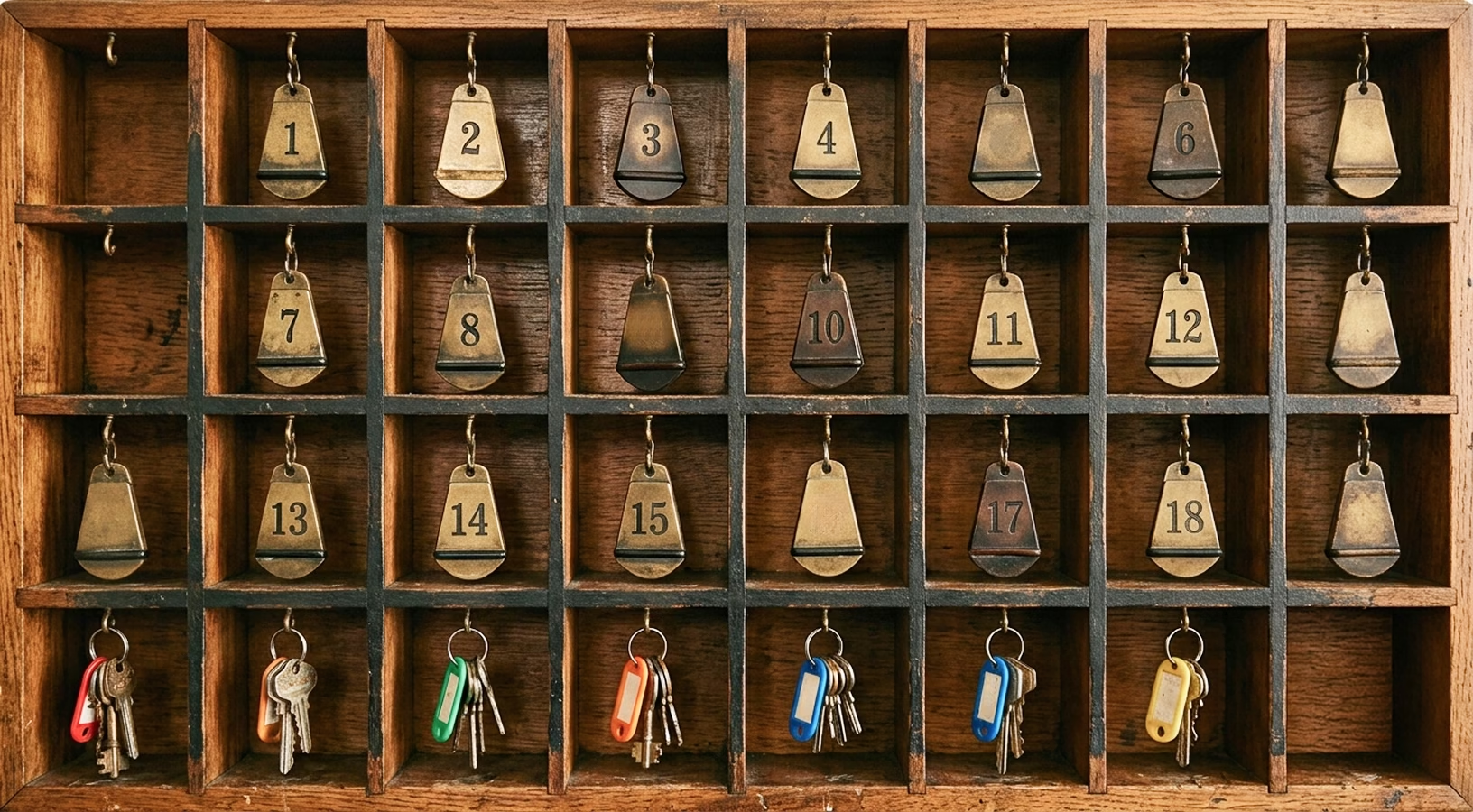
There’s a reason most pet care businesses still operate on a request-and-wait model for bookings. It wasn’t designed that way by accident. It was designed that way because, for a long time, it was the only way things could work.
Before software, before online booking, before anyone said the words “customer journey” without rolling their eyes, everything ran through the front desk. A pet parent would call, or maybe send an email, and someone on staff would piece together whether the stay made sense. Was the dog a fit? Did they have the right vaccinations? Would they get along with the other dogs already booked that weekend?

That manual step wasn’t inefficiency. It was protection. It was control.
And when software finally entered the space, it didn’t rethink that model. It preserved it.
Pet care isn’t a hotel. That’s the whole problem.
It’s easy to say, “Why can’t booking pet care be like booking a hotel?” Hotels figured this out years ago. You pick a room, you click a button, you’re done.
But hotels have it easy.
They deal with people. People are, for the most part, predictable. A king bed is a king bed. Check-in is check-in. Nobody asks if the guest has a history of barking at strangers or trying to escape through chain link fences.
%20(1).webp)
Pet care is different. Every animal comes with its own set of variables. Size, temperament, social behavior, medical needs, past incidents. Multiply that across dozens or hundreds of pets, and suddenly “just let them book online” feels less like progress and more like chaos.
So the industry made a tradeoff. Keep control, accept friction.
Software didn’t remove the friction. It just moved it.
Platforms like Gingr and MoeGo stepped in to help. And to their credit, they did make things better. Fewer sticky notes. Fewer missed emails. A cleaner way to track requests.
But at their core, they still operate on the same idea: the customer asks, and the business decides.
Which means the experience, especially for a first-time customer, often looks like this:
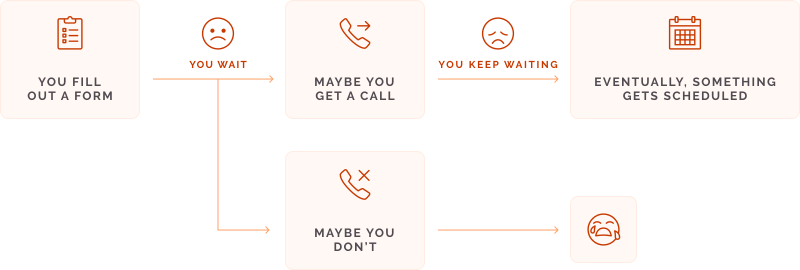
It’s not broken. It just isn’t great.
And internally, that same philosophy shows up in how facilities manage capacity. If you’ve ever worked inside one of these systems, you know the drill. The lodging calendar becomes the center of everything. Staff are dragging reservations around, trying to make everything fit, adjusting as new requests come in.
It works, but it’s a little like trying to solve a puzzle where the pieces keep changing shape.
We’ve had customers describe it as “playing Tetris with dogs,” which is funny until you realize that’s actually how a lot of facilities are running day-to-day operations.
.webp)
What if booking didn’t start with a request?
When we built Goose, we didn’t start with the calendar. We didn’t start with the internal workflow. We started with a simpler question:
What would this feel like if you were the customer?
Not a long-time regular who knows the staff. A new customer. Someone trying to book their first stay at your facility at 9:30 at night after their kid finally went to bed.
In almost every other part of their life, they can complete that transaction instantly. Flights, hotels, dinner reservations, even ordering groceries. But for pet care, they’re asked to pause, raise their hand, and wait to be told “yes.”
%20(2).webp)
That gap is where a lot of demand quietly disappears.
Confirmation-based booking, in plain terms
Goose is the only platform in pet care that uses what we call confirmation-based booking.
That means a customer can create an account, enter their pet’s information, and book their first visit in one flow. Not request it. Book it.
At first glance, that sounds like giving up control. And that’s usually the reaction we get:
“Wait, you’re just letting anyone book?”
Not exactly.
Control doesn’t go away. It just moves upstream.
The difference is where the decision-making happens.
In a request-based system, every booking requires human review. The control lives at the end of the process.
In Goose, the control is built into the system itself.
You define the rules once:
From there, the system enforces those rules automatically. If a pet doesn’t qualify, they can’t book. If a prerequisite is needed, it’s scheduled as part of the flow.
So instead of reviewing every booking manually, you’re reviewing exceptions. And those exceptions become rarer over time as your rules get more dialed in.
It’s a subtle shift, but it changes everything about how the business operates.
The real impact shows up in places you don’t expect
When you remove the “request and wait” step, a few things happen almost immediately.
First, you stop losing customers you didn’t even know you were losing. The missed calls. The people who never followed up. The ones who meant to book but got distracted and never came back.
Second, your front desk gets quieter in a good way. Not because business is slowing down, but because fewer interactions require manual coordination. The work shifts from reactive to intentional.
%20(1).webp)
And third, bookings become more valuable.
Because everything is happening in a structured, transactional flow, you can introduce things that are almost impossible to do consistently in a manual process. Add-ons, upgrades, pricing strategies, all presented at the right moment, without relying on staff to remember to ask.
It’s not about being more aggressive. It’s about being more consistent.
Why this is hard to replicate
If confirmation-based booking feels like an obvious improvement, it raises a fair question:
Why doesn’t every platform do this?
The answer comes down to data.
Legacy systems were built around calendars and requests. They don’t have a deeply structured way of understanding the relationship between a pet, a service, and capacity. So they rely on humans to bridge that gap.
Goose was built differently. The system understands those relationships natively, which is what allows it to make decisions in real time.
That’s also why, when facilities move over from platforms like Gingr or MoeGo, the biggest mental shift isn’t learning a new interface. It’s realizing they don’t have to hover over the calendar all day anymore.
A quick comparison, without the marketing spin
The bigger shift
This isn’t really about booking mechanics.
It’s about whether your system is designed to manage demand or capture it.
Request-based systems are built to manage. They assume demand needs to be filtered, reviewed, controlled at every step.
Confirmation-based systems are built to capture. They assume demand is valuable, and the job of the system is to qualify it instantly and convert it when it makes sense.
Pet care has spent a long time optimizing for the first model. That made sense when everything was manual.
It makes less sense now.
Final thought
If you’ve been in the industry for a while, the idea of letting customers book instantly can feel a little uncomfortable at first. That instinct comes from experience. You’ve seen what can go wrong.
But the goal isn’t to remove control. It’s to apply it more intelligently.
Once that happens, something interesting shifts. Booking stops feeling like a gate you have to stand in front of all day.
It starts to feel like something that just… works.

.svg)