I talk with a lot of pet care operators every week, and marketing almost always comes up. Everyone is trying to understand what works, what does not, and where to spend money without feeling like it disappears into thin air.
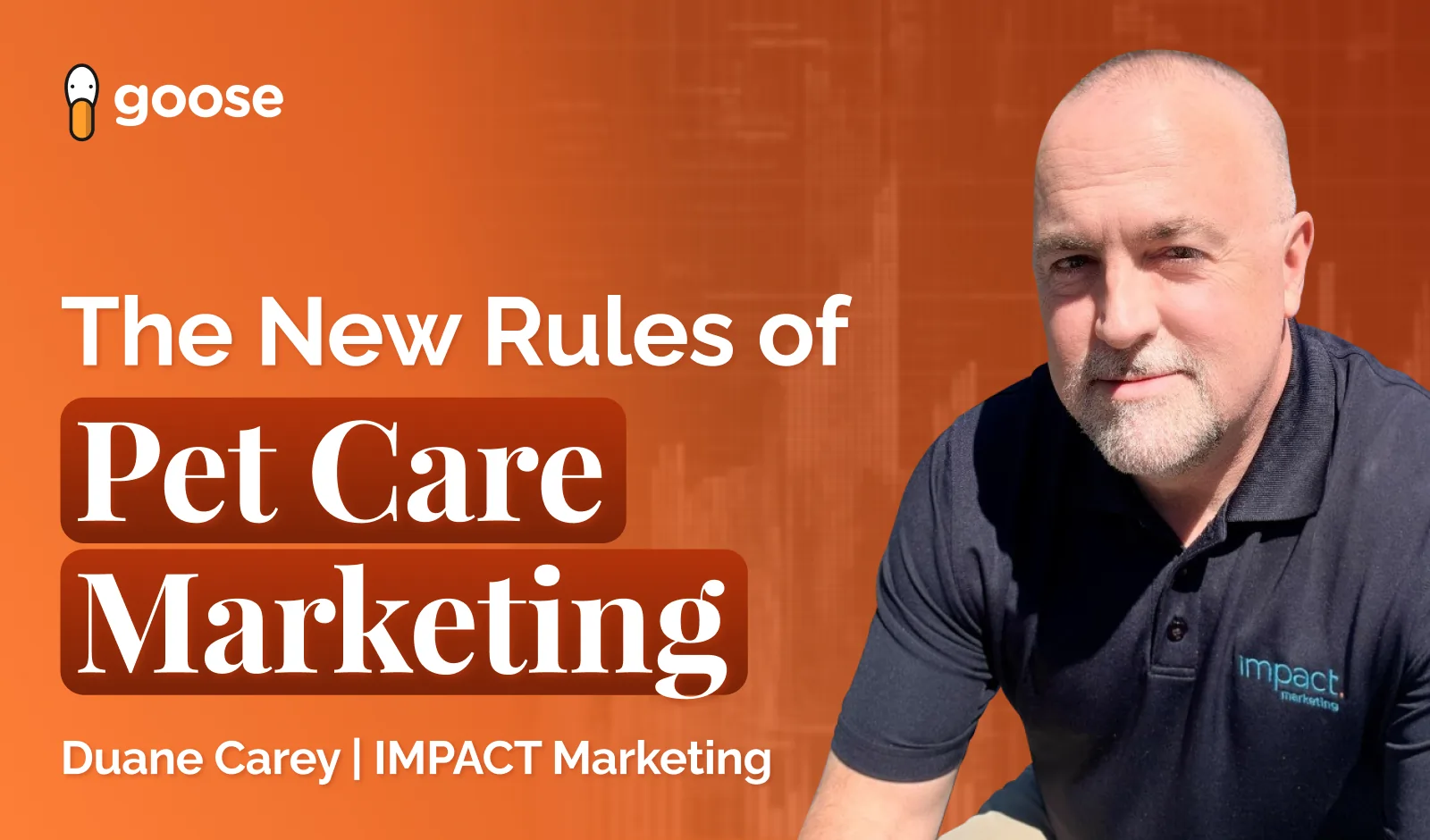
So when I sat down with Duane Carey, President of Impact Marketing, I paid close attention. Duane works with more than one hundred pet care facilities across the country, so his perspective comes from real data across many markets. What stood out to me most is how practical the conversation was. No theory. No buzzwords. Just what is happening right now.
Here are the biggest lessons I took away. The full video is linked above.
1: SEO is not dead, but it has changed

There is no shortage of people saying SEO is over. Duane’s take was more measured. SEO still matters, but it is no longer the primary driver of new customers for most pet care facilities.
Organic search plays a supporting role. It helps reinforce credibility and visibility, especially as AI tools pull from reviews, brand mentions, and long standing online presence. Facilities that have been around longer, have strong review profiles, and show up consistently across the internet tend to perform better in AI driven search results.
That said, SEO alone does not generate the volume most facilities need to grow. It is important, but it is not where demand is captured at scale.
"Google doesn’t make any money if you rank well organically. They make money selling ads, so you have to play the game." - Duane Carey, IMPACT Marketing
2: Google is still where real demand lives
One of the clearest takeaways from the conversation was this. Pet parents still use Google when they are ready to buy.
Despite all the buzz around AI, Duane shared that, out of hundreds of recent leads across his clients, nearly all of them came from Google. Only a handful of those leads came from AI. That data point matters because, while the AI revolution is happening, it’s happening way slower than people think it is.
When someone searches for dog boarding, daycare, grooming, or training, they are usually in decision mode. Google Ads sit at the top of those results for a reason. That is where intent lives.
What has changed is competition. In many markets, the number of facilities running Google Ads has doubled in just a year. Franchises and private equity backed operators are entering markets with sophisticated campaigns and larger budgets. Keeping spend flat in that environment means getting pushed down the page.
This is why smart budget allocation, clear service pages, and measurable booking paths matter more than ever. Google remains the foundation of lead generation, but you have to play the game intentionally.
3: Meta is about engagement, not acquisition
Facebook, Instagram, and TikTok are everywhere in pet care. And they should be. You have incredible built in content every day.
But Duane was very clear about what the data shows. Social platforms are excellent for engagement and reinforcing your brand with existing customers. They are far less reliable as a primary source of new leads.

Most facilities are better off keeping social media in house and focused on showing their dogs, their people, and their culture. That presence still matters, especially as AI models absorb brand signals from across the internet. But when it comes to filling kennels and calendars, Google does the heavy lifting.
4: Competition is rising faster than demand
Demand for pet care has not fallen off. In fact, search volume is still strong. What has changed is how crowded the market has become.
Duane shared examples where facilities went from competing with four advertisers in their market to nine in a single year. The slope of competition is steep, while demand is growing more gradually.
"If you keep your budget the same and competition doubles, you’re going to get pushed down." - Duane Carey - IMPACT Marketing
This creates pressure. Operators who have never advertised before are now feeling it. Visibility that once came for free now requires investment. That is not a bad thing, but it does require a mindset shift.
Facilities that treat marketing as optional or temporary are the ones that struggle. Those that view it as part of ongoing operations tend to stay ahead.
5: Website fundamentals still matter more than anything fancy
Before you drive traffic, you need somewhere to send it.
Duane sees this all the time. Websites that look fine but do not convert. Platforms that cannot be tracked. Service names that sound cute internally but do not match how people actually search.
The facilities that perform best keep things simple. Clear service naming. Logical page structure. Obvious calls to action. And a clean path into booking or contact.

You do not need a perfect website. You need one that works and can be measured.
6: Conversion is where many facilities lose the most value
One of the most eye opening parts of the conversation was around missed opportunity. Duane sees data showing that 30 to 40 percent of calls go unanswered on the first attempt. At the same time, many reservations happen after hours.
This is not a staffing failure. It is a reality of running a busy facility.
"You could have twenty seven people answering phones and still miss calls." - Duane Carey, IMPACT Marketing
When leads cost more and competition increases, conversion becomes just as important as traffic. Instant online booking, clear next steps, and the ability to track what happens after the click all play a role (you might want to check out Goose if you’re into that ;) ).
This is where marketing, operations, and technology start to overlap. Capturing demand matters, but converting it is what actually drives growth.
Final Thought
What I appreciated most about this conversation is that it brought clarity to a noisy topic. There is no silver bullet. The fundamentals still apply. People search on Google. Competition is increasing. Conversion matters.
The facilities that win are not chasing every new trend. They are focusing on lead generation that works, measuring what matters, and removing friction wherever they can.
If you want the full context and examples, I highly recommend watching the video linked above.

.svg)