
Richmond Hill Boarding Co.
In just four months, Emma and Larry doubled revenue at Richmond Hill Boarding Co., expanded into daycare, and turned a paper-based operation into a thriving, modern pet care business.

In just four months, Emma and Larry doubled revenue at Richmond Hill Boarding Co., expanded into daycare, and turned a paper-based operation into a thriving, modern pet care business.



Emma and Larry have never been afraid to start something new. Before settling in Richmond Hill, a small town outside Savannah, Georgia, the couple spent much of their lives in Chicago renovating homes. They later relocated to Indianapolis, where they opened three dry cleaning stores and a delivery route. Business was going well until COVID disrupted the industry, giving them firsthand experience with how quickly circumstances can change.
By the time they moved to Georgia, they were ready for another chapter. Emma was running her own marketing agency, and the couple began looking for a business that could diversify their income and offer more resilience in an increasingly automated world. They had always loved dogs, and Emma had even dreamed of retiring and opening a dog sanctuary.
When they discovered a boarding facility for sale in Richmond Hill, the opportunity felt right. They purchased the business on July 1, 2026, with Larry taking responsibility for daily operations and staffing while Emma focused on marketing and technology.

Emma, Larry, and family with their rescue pup Mae
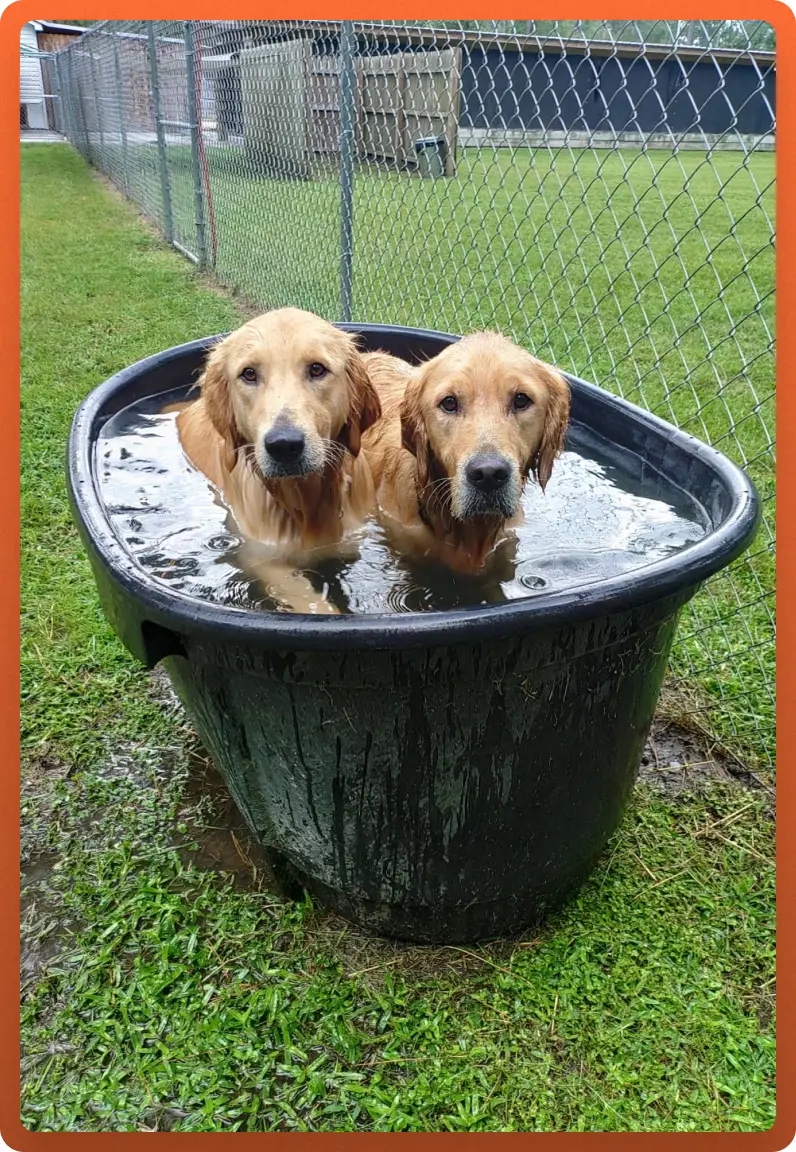
Lots of open space doesn’t mean you get the spa to yourself
One of Richmond Hill Boarding Co.'s biggest advantages is the property itself. Situated on six acres, the facility feels like a small country farm, complete with chickens, open space, and a rural atmosphere. It's the kind of environment where Emma and Larry believe dogs should be able to enjoy the outdoors, socialize, and just be dogs.
The couple quickly saw an opportunity to make better use of the property. They converted a barn previously used for the former owner's hunting dogs into a dedicated daycare space, with improvements to the surrounding play area. Adding daycare wasn't simply about introducing another revenue stream. Emma saw it as a way to build trust with customers who might be hesitant about overnight boarding.
"Daycare was a door opener for people who think boarding is a dirty word," Emma explained. "Bring your dog for one day and see how they like it, and that eases them into the boarding experience."
Although Richmond Hill Boarding Co. had an established customer base, its operations were anything but modern. When Emma and Larry took ownership, reservations were managed through paper calendars, Post-it notes, whiteboards, and text messages. There was no centralized reservation system, and the business hadn't even collected customer email addresses.
Customers were accustomed to texting the facility or simply showing up, leaving staff to manage availability manually. That made reservations especially challenging during busy holiday periods, when knowing exactly how many dogs to expect was critical.
Financial visibility was another concern. Without a reliable electronic ledger, transactions were scattered across payment accounts, cash, and checks. Even understanding the company's historical revenue required some guesswork, making it difficult to get a clear picture of the business they had just purchased.
It was immediately clear that the existing approach couldn't support the business Emma and Larry wanted to build. Choosing a software platform became one of Emma's first priorities. Her experience working with B2B software had shown her what a well-designed platform could accomplish, while her time as a dry cleaning franchise operator had taught her the frustrations of relying on technology that doesn't evolve.
After evaluating several pet care software systems, Emma narrowed her requirements to four priorities:
The booking experience was especially important. Longtime customers were accustomed to making reservations by phone or text, and Emma knew the transition would require changing those habits. She needed a system that would make the new process easier, not more complicated.
Goose offered the marketing and revenue tools she wanted alongside a simple, real-time booking experience. Customers could see availability, make reservations 24/7, and receive immediate confirmation without waiting for someone at the facility to respond.
Moving from a paper-based operation to modern software could have been daunting, especially while taking over a business, training employees, and introducing new services. But within a couple of weeks, Emma and Larry had Goose up and running.
Emma credits Goose's implementation process and responsive support team with making the transition straightforward. Staff training was equally manageable. Despite different levels of comfort with computers, the two new front-desk employees picked up the system quickly with minimal training.

While Goose modernized the operation, Emma focused on getting the word out. Her strategy centered on consistent, hyperlocal marketing: participating in community Facebook groups, responding to boarding recommendations, and sharing what was happening at the facility. Whenever someone asked about local boarding options, Emma made sure Richmond Hill Boarding Co. was part of the conversation, even if it meant simply offering to be someone's backup.
She also started putting herself and Larry on camera, sharing short videos across Instagram, Facebook, and their Google Business Profile. The videos weren't always glamorous. In fact, Emma admits that some of their most successful content almost never made it online.
One video highlighted the renovated daycare facility, while another featured Larry. Together, they generated approximately 50,000 views across multiple social media platforms.
Emma believes authenticity is a powerful advantage for independent pet care businesses. Customers want to know who's caring for their dogs, what happens behind the scenes, and what makes a facility special. Even everyday moments can be interesting to someone considering leaving their pet there.
Alongside organic social media, Emma experimented with Google Ads, Apple Maps advertising, and other local channels. Goose's marketing attribution, automated abandoned-cart follow-up, and segmented email campaigns helped support those efforts, connecting her marketing activity more directly to the booking experience.
Emma was especially impressed by Goose's sophisticated email segmentation, giving her the ability to create targeted campaigns that turn interest into reservations and keep customers engaged.
By November 2026, just four months after purchasing Richmond Hill Boarding Co., Emma and Larry were seeing remarkable results. Monthly revenue had doubled compared with the same month the previous year, and the facility had sold out during several peak periods, including Labor Day and the local school fall break.
 2× Monthly Revenue
Compared with the same month the previous year
 ~2 Weeks to Implement Goose
From setup to an operational system
That success brought new challenges. With the facility selling out during peak periods, managing demand became increasingly important. Goose's waitlist gave the team a structured way to track interested customers and fill openings without juggling text messages and handwritten notes.
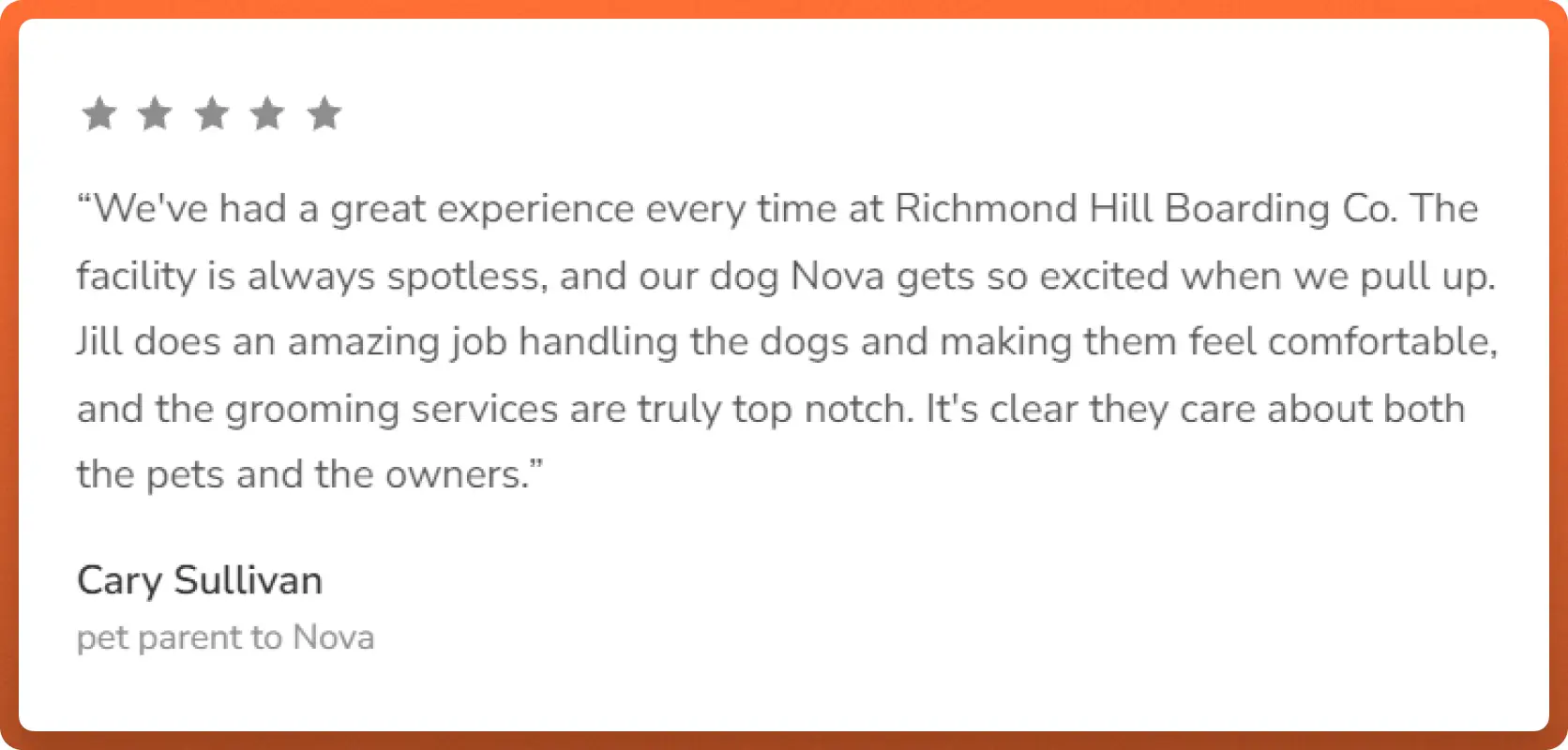
Reputation management also became an important part of their growth strategy. By encouraging customers to share their experiences, Richmond Hill Boarding Co. has been collecting five-star reviews and building the kind of online reputation that helps a local business stand out.
Beyond the immediate operational improvements, Emma has been particularly impressed by how quickly Goose continues to evolve. With her background in software, she understands the difference between a platform that simply maintains existing features and one that actively invests in making the product better.
"What I'm even more impressed with is how much you continue to improve the system," she said. "A lot of times you get into agreements, relationships with software companies and they kind of send these things out to pasture, but I mean it's gotten a lot better even since July."
That continued development is important as Richmond Hill Boarding Co. grows. Emma is already planning to introduce dynamic pricing for peak holiday periods in 2027, putting another of her original software requirements to work.
For other pet care operators considering a change, her advice is straightforward. "I think it's a no-brainer. We looked at a lot of different systems," she said. "I think you'll be surprised at how quick the transition is."
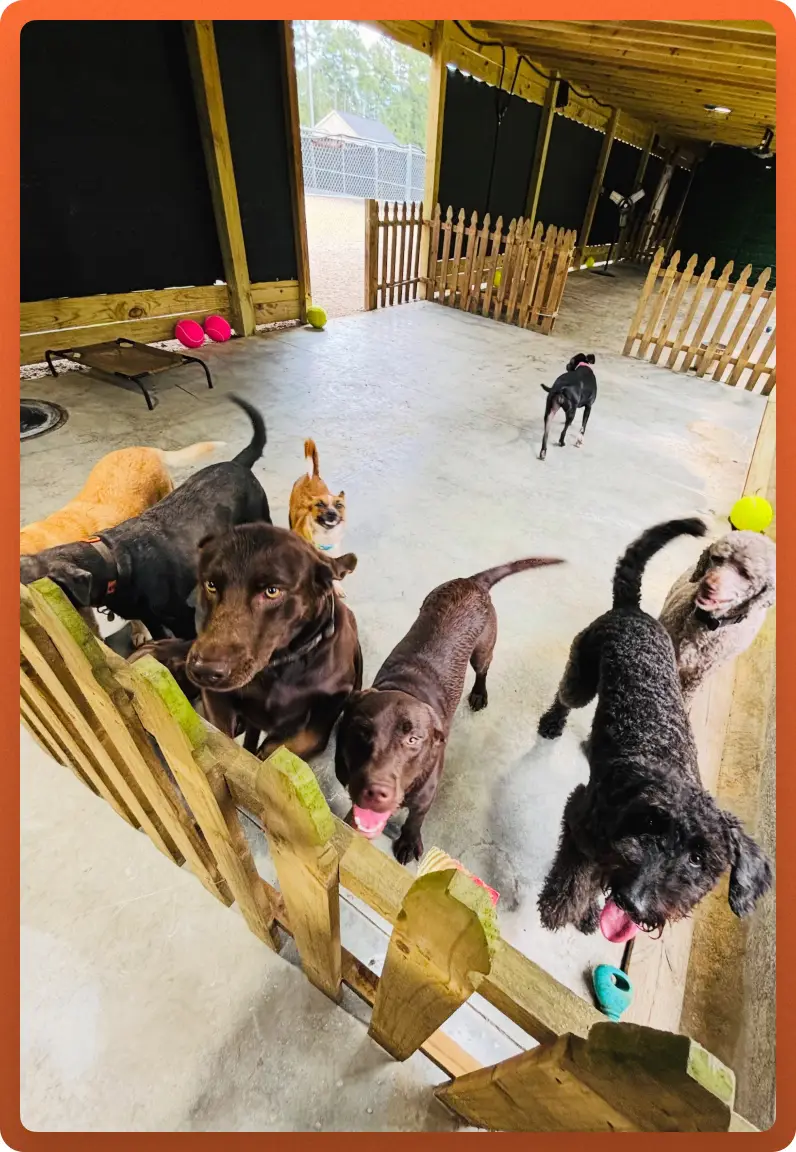
Rain or shine, it’s always a good time at Richmond Hill Boarding Co.
Emma and Larry's vision goes beyond boarding and daycare. They want Richmond Hill Boarding Co. to become a gathering place for the community, where dog owners can meet, socialize, and enjoy the property's rural setting.
Emma envisions breed-specific meetups and "yappy hours," bringing people together around their shared love of dogs. They're still exploring what local zoning will allow, but the idea fits naturally with the business they're building. They've even considered adding more animals to the hobby farm, leaning further into the country atmosphere that makes the property special.
Just four months earlier, Richmond Hill Boarding Co. was relying on paper calendars, Post-it notes, and text messages. Today, it's a growing business with modern booking, an expanded service offering, and a much bigger vision for the future.
For Emma, Goose has become an important part of making that vision possible.


For Lynlee Lemons, great pet care starts with health, comfort, and close attention to the animal. Rockin’ L Crossing brings that philosophy to life with a premium lodge experience rooted in her animal science background, while Goose gives her team the tools to keep operations simple, efficient, and personal.


Bark Mountain Pet Resort didn’t happen by accident. Lauren Crandall and her Susan Rollan spent years learning the industry, then rebuilt a facility from the ground up to create a more thoughtful, structured experience for dogs. Here’s how they did it and doubled their revenue in just one year.


In just weeks, Jungle Jim’s Total Pet Care went from handwritten reservations to full online booking with Goose. Revenue jumped 78% as self-service reservations and built-in upsells replaced phone calls and manual work. See how Jungle Jim’s combined modern convenience with small-town charm to better serve Dewey Beach families and their pets.

