If you run a boarding facility, there is a good chance your team spends a surprising amount of time managing room assignments. Reservations come in, rooms get assigned, more reservations come in, and eventually the calendar stops fitting together quite as cleanly as it did when those first decisions were made. Someone moves one dog to another room, fills a gap, creates a new opening somewhere else, and keeps rearranging things until the puzzle works again.
When your team has done this for years, it can feel like a normal part of running a boarding business. But a lot of that work is not really an operational problem. It is a result of how the software thinks about inventory in the first place.
The problem starts with how inventory is defined
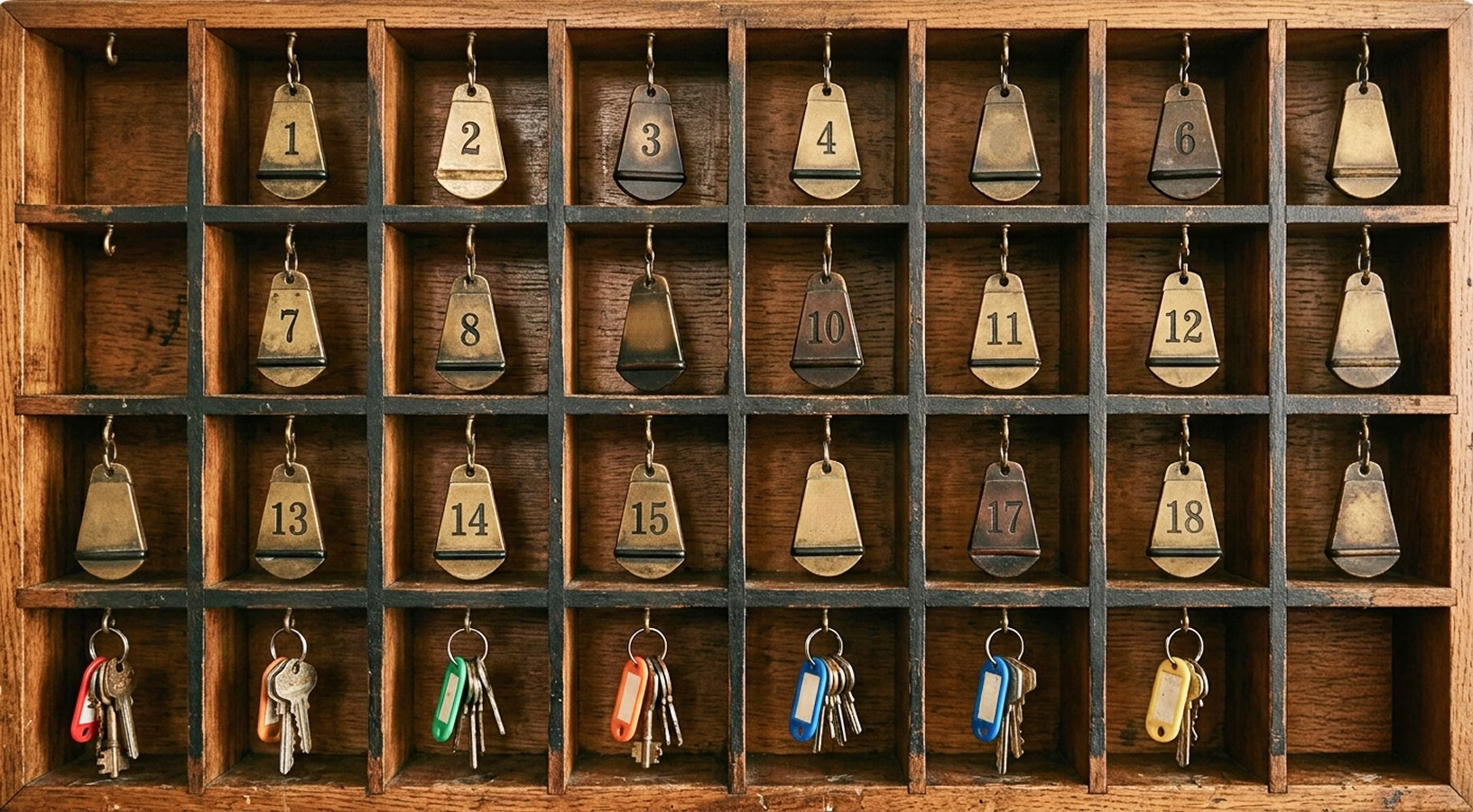
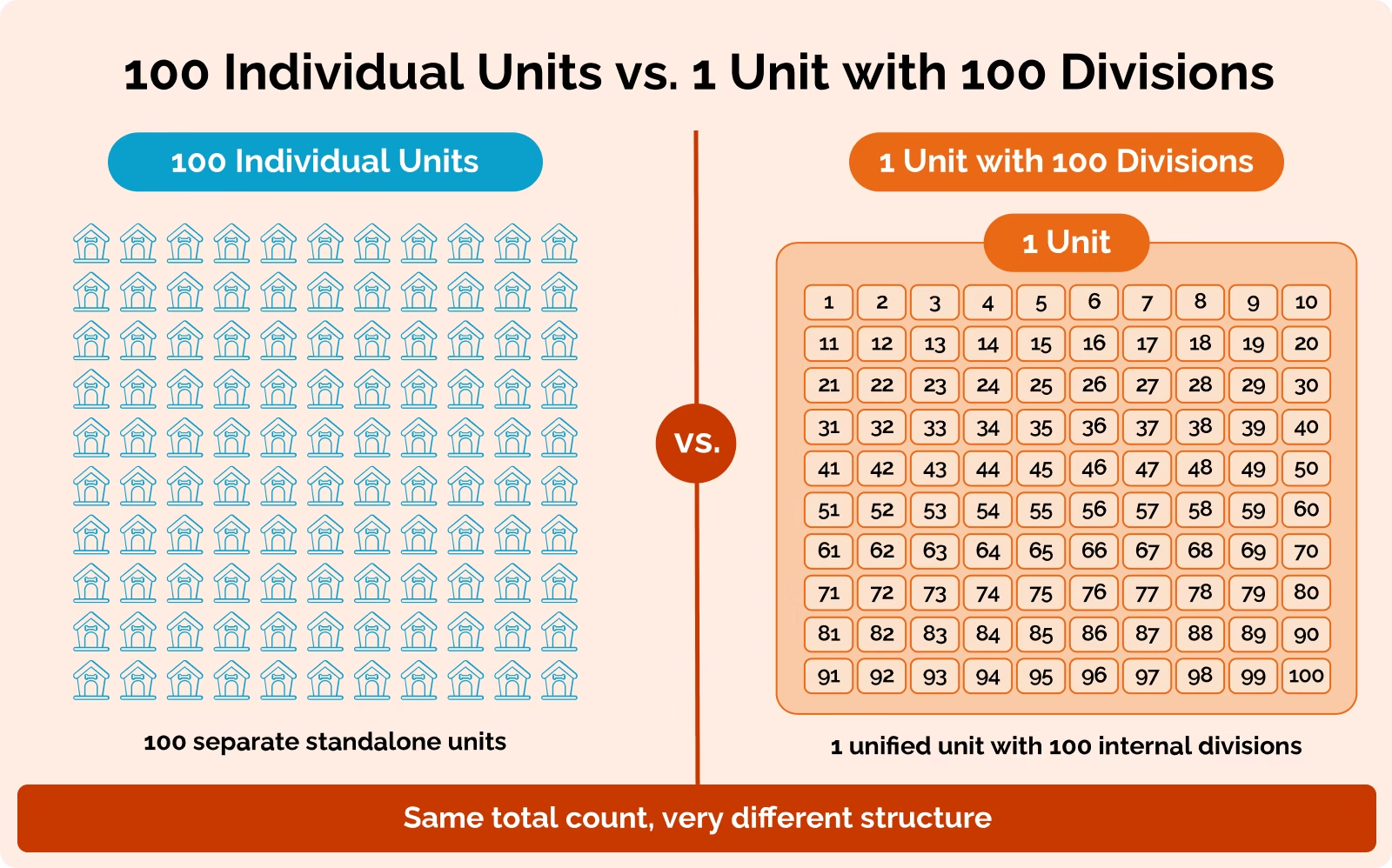
Many pet care systems are built around the individual room. If you have 100 rooms, the software effectively manages 100 separate units of inventory, with reservations tied to specific rooms relatively early in the booking process. On the surface, that seems logical because every dog ultimately needs somewhere to stay.
The problem is that when someone books six months ahead for Thanksgiving, they are usually not buying Room 27. They are buying a boarding stay. The exact physical room matters eventually, but in most cases it does not need to be decided when the reservation is made.
That timing matters. When you assign a room far in advance, you are making the decision before you know what the rest of the schedule is going to look like. You do not know every arrival and departure that will eventually come in, which reservations will change, which customers will cancel, which dogs will need special accommodations, or how the final mix of stays will fit together. Your team makes the best decision it can with the information available at the time, but as more reservations are added, those early choices can create gaps and conflicts that have to be cleaned up later.
As the calendar fills up, a room may technically be available, but the surrounding assignments make the opening difficult to use. Another reservation might fit if two dogs are moved. A one-night gap might appear between longer stays. The facility may still have physical capacity, but the way reservations were assigned makes some of that capacity harder to sell.
So someone on your team rearranges the schedule until it works again. Now repeat that process dozens of times a day.
While it may feel like your team is creating capacity, they are actually spending massively more time than they should simply recovering capacity that was already there.
Goose starts with the capacity instead of the room
Goose approaches boarding inventory differently. If you have 100 available rooms of a particular type, Goose can manage that as 100 units of sellable capacity. Reservations are booked against that total rather than requiring an exact physical room to be selected as soon as the reservation comes in.
The room assignment can happen later, when your team has a much clearer picture of what is happening inside the facility. By then, you know who is really coming, which reservations changed, which ones were canceled, which rooms are physically available, and whether certain dogs need particular accommodations.
In other words, you are making the room decision when you actually have enough information to make a good room decision.
That distinction sounds small, but it changes the role of the room assignment. Instead of determining what you can sell, it becomes what it should be: an operational decision about where a dog stays.
Side by side
Room assignment and inventory management are not the same
There are plenty of good reasons for your team to care about which room a dog goes into. You may want a dog in a quieter area, keep pets from the same household together, accommodate a customer preference, or make a decision based on temperament, staffing, cleaning, or maintenance. Those decisions require judgment, and your team should absolutely make them.

Inventory management should not be treated like room assignment. Inventory management is about how much capacity you have, how much have you sold, and how much is still available. When those two functions are tied directly together, a room assignment made months ago can affect whether the system believes you have space to sell today. Your team then has to step in and fix the calendar. That is when software starts creating operational work instead of removing it.
Turnover makes the difference easier to see
Consider a dog that checks out today. If that room can be cleaned and used again today, then from an inventory perspective, you have sellable capacity. The problem with room-based inventory is that the system is not just asking whether you have an open room. It is asking whether the specific room assignments already on the calendar leave a room open for the exact dates of the new reservation.
That can create some strange situations. You might have a dog checking out this morning, another dog assigned to that room tomorrow, and a customer trying to book a stay that starts today and runs for several nights. Physically, your facility may have enough capacity to accommodate everyone, but the existing room assignments do not line up neatly enough to make that obvious to the system. Someone on your team may have to move the reservation arriving tomorrow to another room, move another dog somewhere else, and keep working backward until the calendar fits.
Again, your team did not create any new capacity. They simply rearranged the room assignments so the software could see capacity that was already there. Multiply that across dozens of arrivals, departures, extensions, cancellations, and new bookings, and it becomes a massive amount of unnecessary work.
In a pooled model, the calculation is much simpler. A dog checks out, that capacity becomes available again, and the system can sell it without first solving the room-assignment puzzle for the rest of the stay. The software tracks how much you can sell, while your team decides where everybody physically goes. That is a much cleaner division of labor.

Your front desk should not be the inventory engine
Front-desk teams have been conditioned to think playing Tetris with the room calendar is a required skill for maximizing occupancy. They spend hours spotting gaps, moving reservations around, and trying to manufacture availability during busy periods. But that shouldn’t be anyone’s job. If your inventory can accommodate the demand, your system should know how to sell it, without requiring someone to constantly rearrange the calendar behind the scenes.

The software should know how much capacity exists, how much has been sold, and how much remains available. Your team should be spending its time on the decisions where human judgment actually matters, not constantly rearranging reservations so the system can recognize an opening that physically existed all along.
That is ultimately the difference between a room-based inventory model and a pooled inventory model. A room-based model starts by asking, “Which room should this reservation go into?” Goose starts with, “Do we have capacity for this reservation?”
The room still gets assigned. The dog still has somewhere to sleep. Your team still has control over the operation. The difference is that the physical room decision happens when you have the information needed to make it with confidence, rather than months earlier because the software requires it.
At the end of the day, inventory software should help your team use the capacity you have, not force them to continuously reorganize the calendar just to prove that capacity exists.

.svg)